
The surprising effect of yawning on tension caused by chronic pain
Yawn like you mean it. Why your nervous system is begging you to slow down and stretch like a cat

I didn’t expect relief from chronic pain to begin with what looks like me silently judging a boring meeting—but here we are.
Today I came across a free, online training exercise programme for chronic pain, and so far I like it. It’s actually helped me release muscle tension I get pretty much all day, every day, due to chronic pain, so much so that I ended up stretching and yawning at the end of the first session. This is a really good sign, as I’ll explain below.
By the way, if you want to try this programme for yourself, it’s called painTRAINER.
painTRAINER is 8 audio sessions designed to teach relaxation and pain coping skills, each lasting about 30-45 minutes. It’s made by researchers and healthcare professionals at Northwestern University (Chicago, IL, U.S.A.) and Duke University (Durham, NC, U.S.A.), and has a reasonable privacy policy.
Just a quick note - I’m not affiliated with painTRAINER in any way, I don’t know the creators of it, we’ve never spoken, they aren’t paying me in any way to write this. I simply want to share something I found that I like.
The power of panticulating (yawning and stretching)
Foxes do it. Giraffes do it. Babies do it. Tigers so it. A stretch combined with a yawn, sometimes called pandiculation, seems to be pretty much universally enjoyed across all vertebrate animals (from the Latin vertebrātus meaning ‘jointed’, which stems from vertere meaning ‘to turn’).
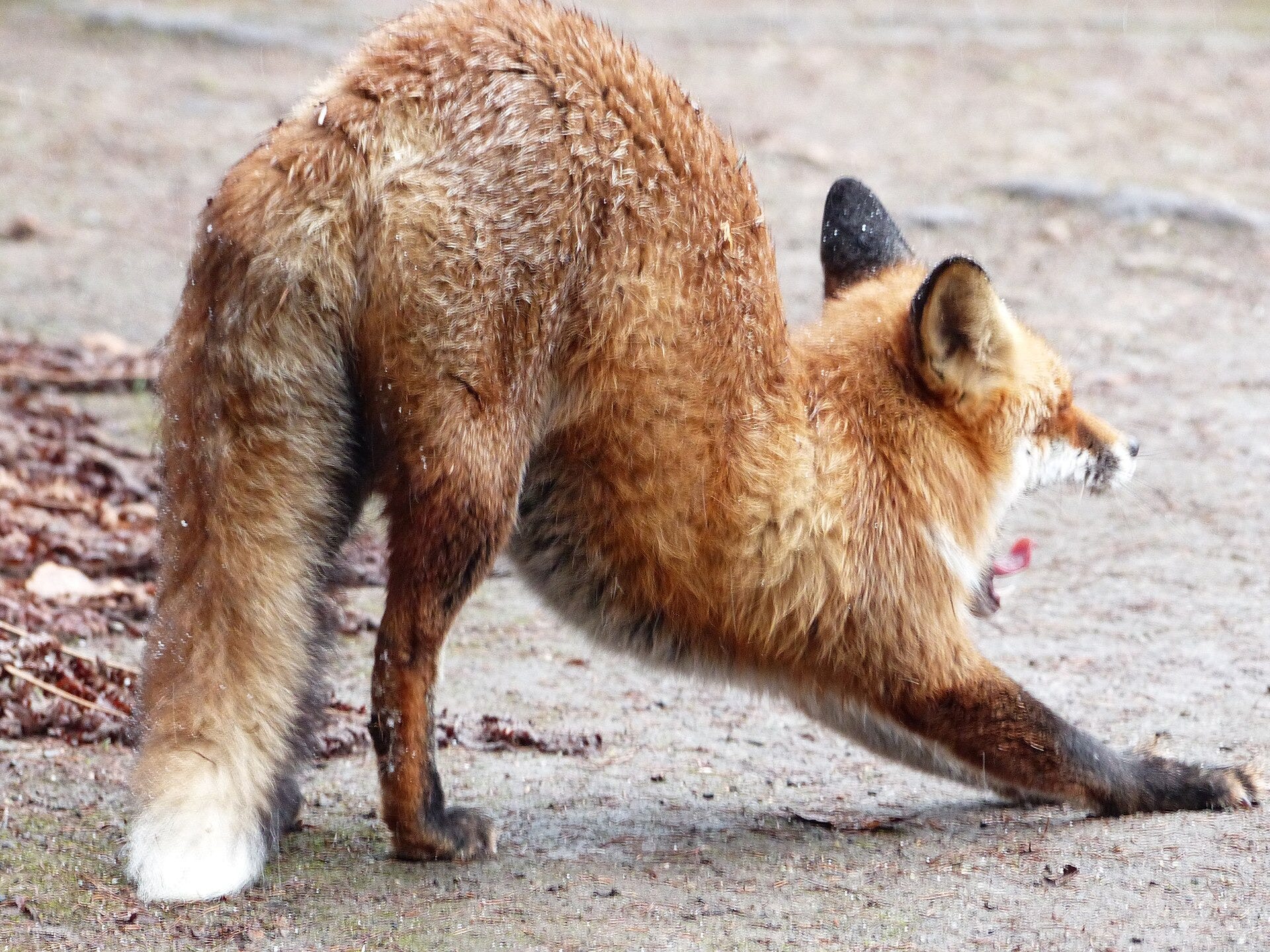

Mammals, birds, reptiles, amphibians, even fish love a good yawn and stretch. When you see this kind of universal behaviour, it usually means it’s quite important, in a fundamental way.


So what’s going on here? Surprisingly, there doesn’t seem to be a clear scientific consensus, at least according to this PubMed paper I read. Theories range from stimulating wakefulness, to cooling the brain (yes, really), social reasons, to help ear pressure.

A lack of consensus between scientists on an issue is awesome, because it means there are still things we don’t know which are waiting to be discovered. Which is why scientists get up in the morning - to learn, to understand things.
In the meantime, we get to wonder and postulate about yawning. Personally, after years of practicing somatics (a kind of gentle movement exercise similar to pilates, but focused on relaxation) to help with my chronic joint pain, I prefer the somatics explanation to pandiculation. This theory suggests that it’s a mechanism to relieve tension in muscles.

What you will experience for yourself in the first session of painTRAINER is something I’ve come to experience time and time again in somatics: that a simple contraction (tensing) of a muscle, followed by a slow, gradual release, can have a profound effect on relaxation, and letting go of muscle tension.
For me, this makes sense. At the end of a really good meditation or somatics exercise, I often feel the need to yawn and stretch, when my body is feeling more relaxed, less tense, and free to move. And if I don’t, I actively try to trigger a yawn by acting a fake yawn - it’s surprising how often this can trigger the body into actual, real yawn. Combine this with a nice, long stretch - it feels great.
So the next time you’re sore and aching with pain in your joints and muscles, while the world is telling you to “do more“ and “push harder,” listen to your body - it might be whispering, “what if we just… yawned instead?”


I yawn a lot! Thanks for sharing this James, very interesting. I’m wondering if you have ever come across Sophrology? I discovered it a couple of years ago and it has helped me enormously - again it’s all to do with listening to your body and calming your nervous system down
Great idea. "Putting on a happy face" sometimes make you happier, so why not faking a yawn?