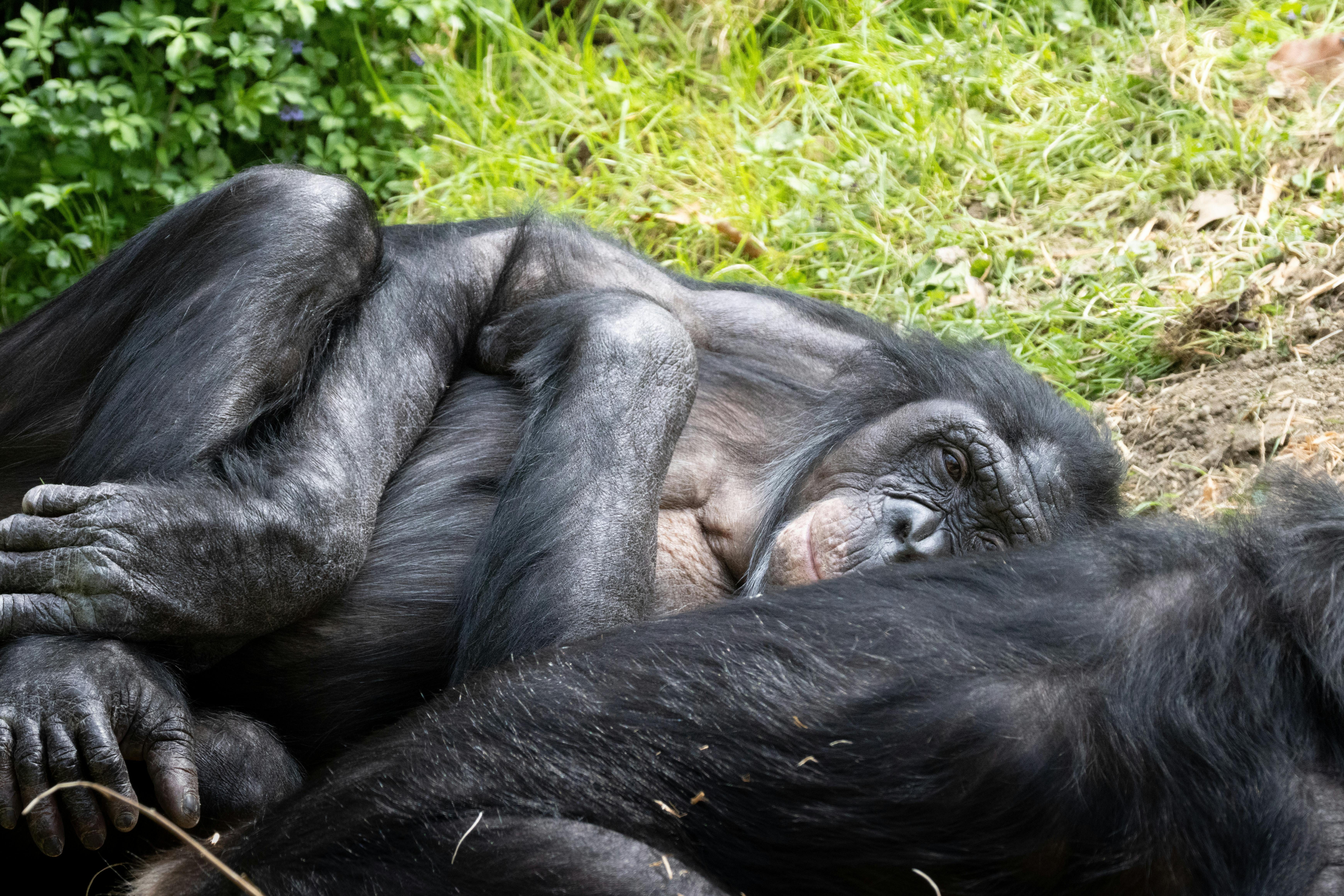
What this chimpanzee can teach us about reducing your chronic pain, fatigue and anxiety
Built to rest: the art of ape-ing out (without burning out)

It’s surprising how many useful things poeple like us with chronic pain, fatigue and other illnesses can learn about how to live more in harmony with our bodies simply by observing animal behaviour.
Us humans have built an incredible un-natural environment around us designed to keep us warm, dry, safe, and facilitate all the technological advances which enable us to build hospitals, schools, supermarkets, and all the other things which provide us with our modern lifestyle. There are huge benefits of course, but there are also some costs.
One obvious one is our detachment from the natural environment which our bodies are evolved to live with. In part, this is the point - the natural world harbours diseases, parasites and predators which can kill us. But it also contains open space, calm, peacefulness, and lush natural environments which are a feast for the senses.
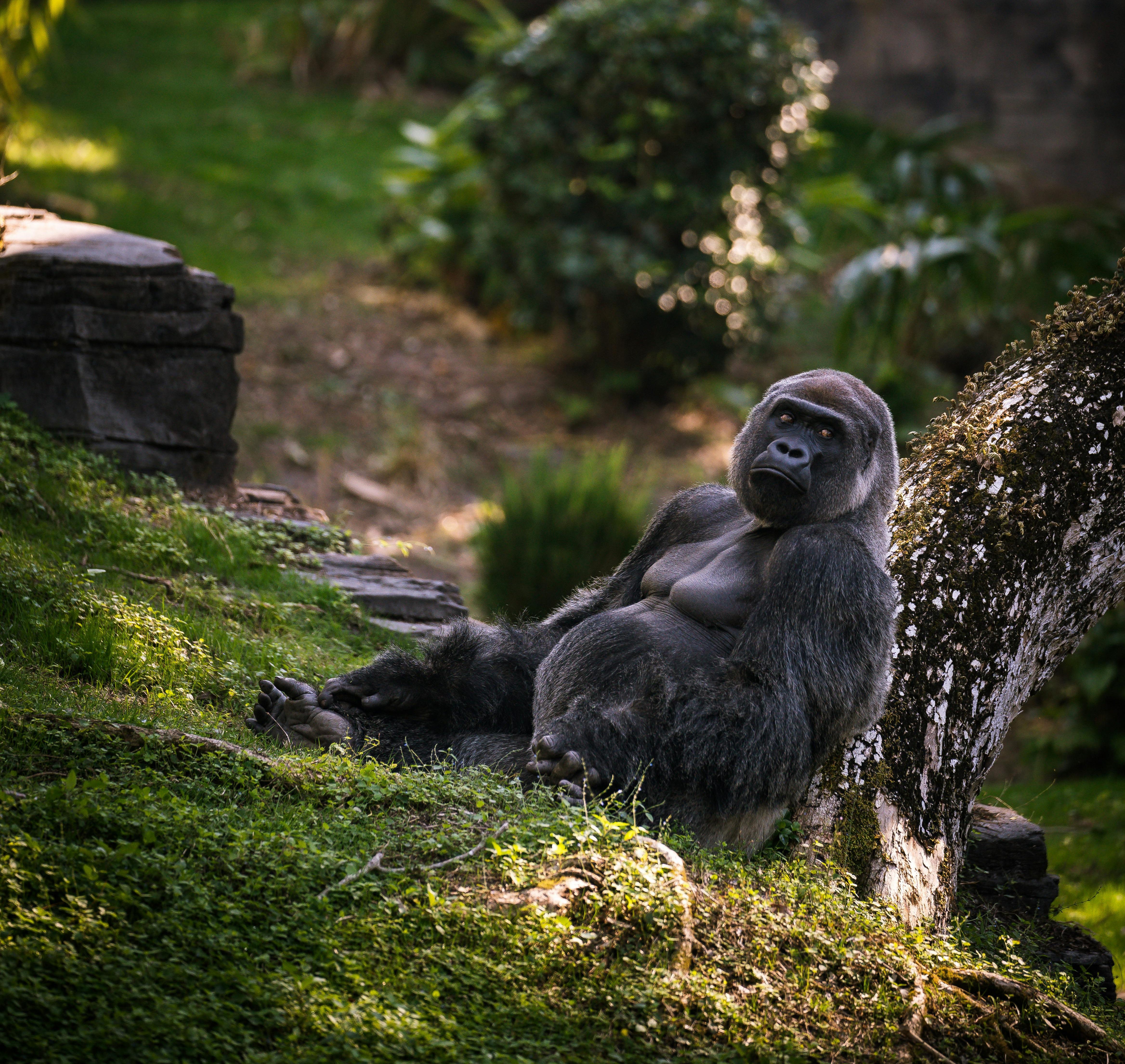
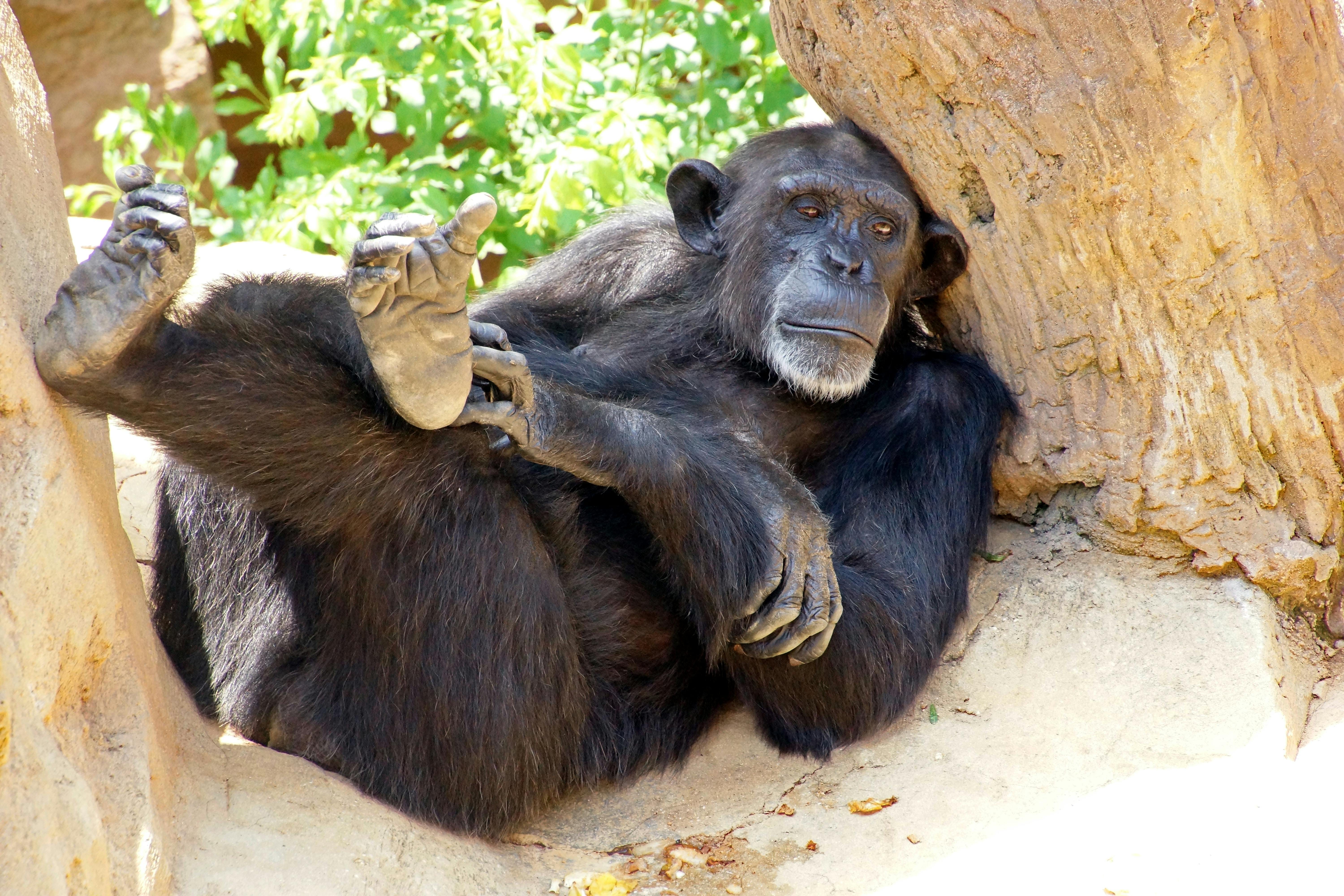
Watching any documentary on wild apes, I am always struck by how relaxed and easy life appears, at least for most of the time. Apes lounging around, grooming, making tree nests, climbing trees, foraging for food. Relaxed bodies. Calm minds.
Of course, there are also periods of high tension. Apes can be aggressive, they can fight intruders or go on hunting parties, they can have internal disputes. But generally these seem to be occasional and short-lasting.
It occurs to me that this is the kind of environment our bodies are evolved to live in. Calm and peacefulness for most of the time, anxiety and high alert for brief moments.

But this isn’t what we actually live in. What we live in is the inverse: a world which stimulates us into high alertness for most of the time (mobile phones, social media, TV, 24 hour news, work, driving, worrying about finances), with only brief periods of calm.
From everything I’ve read, such as this NHS patient information leaflet on chronic pain and stress, this kind of environment can only amplify chronic pain and fatigue.
It also explains why relaxation techniques can be so helpful. Last week I started a free science-driven relaxation programme called painTRAINER. I’m finding it helpful for reducing tension caused by my chronic pain. Week 2 involves learning how to do small 1-minute relaxations throughout the day. The goal is to get into the habit of doing several of these (10-20) every day, whether you’re sitting, standing, waiting at traffic lights, doing laundry or whatever - just stop, take a deep breath, say the word “Relax“ in your head as you slowly exhale. Or, taking a cue from our ape cousins, I might just find a soft place to curl up for a few minutes, or go outside and touch and smell some grass.
I don’t know how well it’s going to go, as I often find it hard to build a new habit, especially one which needs doing several times a day. I might get a cheap watch with an alarm to help me, or the programme suggests leaving reminders around the house like post-it notes or adhesive dots.
Why not try this out with me and let’s see if it helps. Every hour or so, just ask yourself - what would a bonobo be doing right now?